

Depression: A Survival Guide for Resilience
I have always considered myself an extrovert – well, maybe an ambivert – with times I need to be an introvert. So, when the pandemic hit in 2020, I was thrust into isolation. I felt depressed.
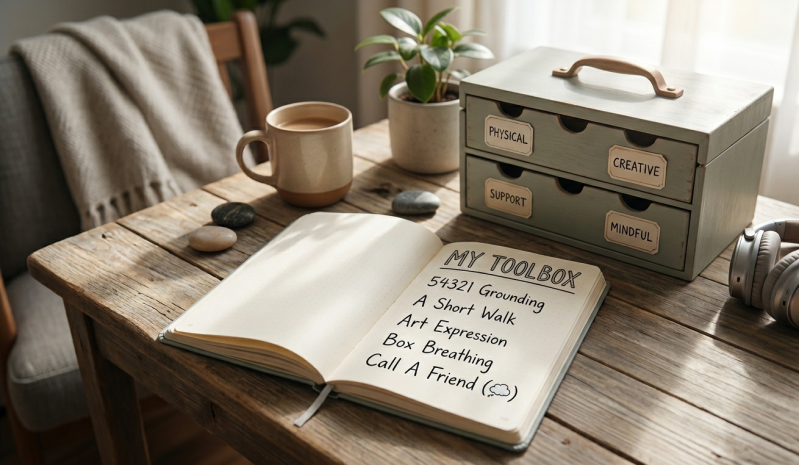
Depression is a highly individual experience. While low mood and low energy are hallmark features of depression, some people also experience appetite changes, fatigue, sleep disturbances, or lack of motivation. Some people can power through despite the depression, and some people crumple. Because depression affects everyone differently, personalized care is important. What works for you might not work for someone else - medications, exercise, counseling, friendship, and lifestyle modifications. Let’s make a list to put in your toolbox.
Be fully present when the mind is racing or feels completely numb.
- The "Five-Minute Rule": Commit to doing a task (like washing three dishes or stretching) for just five minutes. Often, the hardest part is the transition from rest to action.
- Box Breathing: Practice a simple physiological hack to calm the nervous system. Inhale for 4, hold for 4, exhale for 4, hold for 4.
- Behavioral Activation: Choose one small activity that used to bring you joy and doing it without waiting for the "urge" to strike. Action often has to precede motivation.
Smash the "negative filter" when heavy thoughts surface.
- Thought Challenging: Use a journal to write down a depressive thought like "I’m a failure", and counterbalancing it with one objective fact like "I finished a difficult project last week".
- Morning Pages: Write three pages of stream-of-consciousness thoughts first thing in the morning to "drain" the brain of stagnant energy.
- Artistic Expression: Try a low-pressure creative endeavor like adult coloring books, clay, or even "ugly painting" where the goal is to release negative feelings, not create a masterpiece.
Change your physical space to influence your internal state.
- The "Sunlight First" Rule: Aim for spending 10–15 minutes of natural light within an hour of waking up to help regulate your circadian rhythm.
- Nourishment over Nutrition: Keep "no-prep" snacks (nuts, protein shakes, fruit) available. Feeding your brain is more important than a "perfect" meal.
- Digital Boundaries: Curate your social media feed to remove "comparison traps" and setting a hard "phone-away" time an hour before bed.
Tether yourself to the world - don’t let isolation be depression’s best friend.
- The "No-Pressure" Text: Send just an emoji or meme to a friend.
- Support Groups: Whether online or in-person, engage in a "me too" moment..
- Body Doubling: Start an video call with a friend while you both do chores or work. You don't have to talk.
Sometimes self-care isn't a bubble bath; it’s brushing your teeth, drinking a glass of water, or forgiving yourself for having a "low-power" day.