

Caught in the Middle: The Modern Guide to Surviving the Sandwich Generation
Balancing Careers, Kids, and Aging Parents
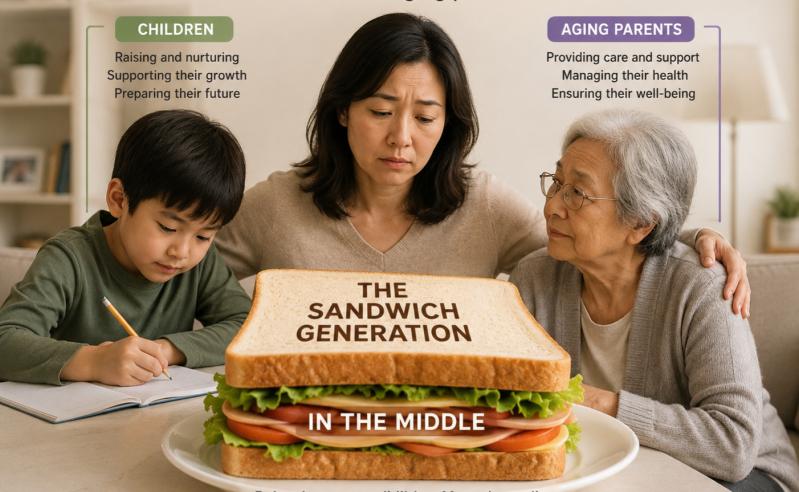
Imagine a typical Tuesday morning: you are reviewing a critical presentation for a 9:00 AM corporate meeting, your teenager is frantically looking for a lost textbook while asking for guidance on college applications, and your cell phone vibrates with a call from your aging parent’s doctor regarding a medication adjustment. This is the reality of the Sandwich Generation—a demographic caught in a profound, exhausting, and emotionally complex intersection of love, duty, and professional ambition.
The phrase "Sandwich Generation" refers to individuals who find themselves simultaneously caring for aging parents or grandparents while still raising children or providing financial and emotional scaffolding to young adults. When you overlay this dual caregiving reality with the demands of a modern career, time shifts from a manageable resource to a scarce commodity. The psychological weight of being everyone’s rock can lead to severe burnout if left unmanaged. This comprehensive guide outlines strategies to transform your routine from reactive crisis management into a sustainable lifestyle.
Redefining the "Sandwich" Map: The Paradox of Care
To manage this space effectively, one must first recognize that dual caregiving requires running two completely opposite scripts at the same time. It is a psychological paradox that tests the limits of cognitive flexibility.
The Child/Young Adult Dynamic: Cultivating Independence
Caring for children at home, or supporting them as they transition into early adulthood, requires an active push toward independence. Your job as a parent is to step back gradually, allowing them to solve their own problems, manage their schedules, and experience minor failures. You are shifting from a direct manager to an advisor.
The Elder Care Dynamic: Managing Loss of Independence
Conversely, supporting an aging parent or grandparent involves navigating a gradual loss of independence. This requires immense emotional sensitivity. It involves stepping in to assist with things they used to do autonomously—such as driving, managing finances, or tracking medical histories. This role reversal can trigger feelings of grief, resistance, or vulnerability for the older adult, requiring you to slow down, practice patience, and preserve their dignity.
The Cognitive Load: Moving directly from an interaction with an aging parent (where you must protect their dignity while taking control) to a meeting with your child (where you must resist taking control to build their autonomy) is emotionally draining. Acknowledging this friction is the first step toward self-compassion.
Building Your Framework: Systems That Save Sanity
Survival in the sandwich generation cannot rely on mental checklists and sheer willpower. You must transition your household and care routines into an organized system.
The Comprehensive Responsibility Audit
Sit down with a blank document and write down every logistical task required to keep your ecosystem running. Divide them into three buckets: Automate, Outsource, and Delegate.
- Automate: Set up automated refills and mail-delivery options for your parents' medications. Place household staples, both for your home and your parents', on recurring subscription services.
- Outsource: If your budget allows, lean on grocery delivery apps, professional deep cleaning once a month, or local senior transport networks to free up valuable hours.
- Delegate: Your children and young adults are capable of contributing. Assign clear household duties—meal prep, laundry rotation, or yard care. Frame this not as a chore, but as essential preparation for their own adult lives.
Constructive Family Meetings
Hold explicit, structured conversations with both generations. With teenagers or young adults, define clear boundaries around household contributions and mutual respect for your work hours. With aging parents, hold transparent, dignified discussions regarding what you can personally provide and where outside professional or community care will be utilized. Involve them in these choices early, before a medical emergency forces a sudden decision.
Workplace Advocacy and Flexibility
Do not hide your caregiving responsibilities from your employer as if they are professional flaws. Frame adjustments to your schedule around productivity. Approach managers or human resources with clear, structured proposals: "By adjusting my hours to a compressed schedule or working remotely two days a week, I can guarantee high-quality project delivery while successfully managing family logistics." Familiarize yourself with corporate employee assistance programs (EAPs) and formal family leave policies to protect your career during periods of acute medical need.
The Non-Negotiable Act of Self-Preservation
It is a fundamental truth of caregiving: you cannot pour from an empty cup. Taking care of your personal health, mental well-being, and emotional stability is not a luxury; it is a functional requirement to keep the entire family unit afloat.
Micro-Rest vs. Macro-Rest
When your daily schedule is packed, waiting for an annual vacation to reset is unrealistic. Instead, you must weave intentional recovery directly into the fabric of your week through a combination of micro-rests and macro-rests.
Micro-Rest (5 to 15 Minutes)
- Enjoying a quiet cup of coffee before the household wakes up.
- A 10-minute walk outside without looking at your phone.
- A brief breathwork or meditation practice between meetings.
Lowers immediate cortisol (stress hormone) levels and prevents acute midday exhaustion.
Macro-Rest (1 to 4 Hours)
- Blocking out a Sunday afternoon entirely for a personal hobby.
- Leaving the house to meet a close friend for dinner.
- • Participating in a local or online support group.
Disconnects your brain from caregiving roles, helping you maintain a sense of personal identity.
The Power of the Protective "No"
To make room for these rests, you must learn to decline non-essential demands. During intense caregiving seasons, say no to additional neighborhood committees, school bake sales, or draining social commitments. Guarding your remaining white space on the calendar is an act of resilience.
Finding a Reflective Mirror
The emotional weight of the Sandwich Generation often includes unspoken feelings of guilt, anger, or deep grief. It is critical to find a safe space to process these emotions without fear of judgment. Consider joining peer caregiving support networks, working with a licensed counselor, or leaning heavily on trusted friendships. Speaking these challenges out loud reduces the isolation that so often accompanies dual caregiving.
Conclusion: Prioritizing Grace Over Perfection
There is no medal for handling every single family crisis, work deadline, and household chore entirely on your own. True success in this season of life does not look like a flawless, static balance. It looks like an adaptable, fluid rhythm.
There will be days when your career requires your full focus, and days when family demands take priority. Give yourself permission to live within that gray area. By putting robust systems in place, communicating your boundaries clearly, and ruthlessly protecting small pockets of time to meet your own needs, you ensure that you can care for the people you love without sacrificing your own future, career, or health.